Humanistic HCI in ACM Interaction
專家主觀性 expert subjectivity
1. HCI reaches out.
"Key examples include the rise of
aesthetics as an approach to user
experience design [2]; the introduction
of “reflective HCI” [3] to reposition the
field with a more self-critical stance;
as well as the use of feminist [4], queer
[5], and postcolonial [6] approaches to
emancipatory computing."
2. The humanities reach in.
" As alternatives, Winograd
and Flores introduced Heideggerian
phenomenology, biological accounts
of cognition and language, and
speech act theory to HCI. Offering
an epistemological critique of the
field as a whole and introducing an
alternative epistemological stance are
philosophical activities. It is easy to see
that Winograd and Flores’s seminal
work was in fact humanistic HCI, even
if no one at that time was using the
term."
3. What is Humanistic HCI?
". It is not
the same as digital humanities, which
is humanistic research supported by
digital technologies, and which is by
and large practiced by humanistic
scholars (see, e.g., [9])."
"Humanistic HCI operates in the
opposite direction: It is HCI research
and practice that is supported by
humanistic practices, theories, and
methods."
4. History and tradition
"Many HCI
systems are presented with little to
no reference to their own historical
genealogies, and the field itself has no
significant histories beyond a generally
shared sense that HCI has had three
paradigms or waves [13,14]."
" Our expectation
is that interaction design and/or HCI
(whatever their relation is or will
become, exactly) will develop much
more of a historical sensibility in the
coming decade."
5. Conceptual analysis
" During its rise
in the 19th century, science began to
displace philosophy as the knowledge
discipline best able to account for the
world. What was philosophy’s role
in a scientific era? One answer was
that philosophy ceased to provide
doctrines and instead became an
activity directed at the clarification
of thoughts. As the early Ludwig
Wittgenstein wrote, “The object of
philosophy is the logical clarification of thoughts. Philosophy is not a theory
but an activity. A philosophical work
consists essentially of elucidations”
[15]. Philosophy was thus moving away
from producing original systems and
toward the disciplined analysis of the
concepts we think with."
Summary:
" overall humanistic
dispositions: the attempt to take on a
situation or work that is in some sense
confusing; to do so holistically (rather
than analyzed and operationalized
into well-defined parts); to bring
clarity to it; and to do so in a way that
orients itself toward emancipatory
change (diversely defined)."
Humanistic HCI Practices and Methods
1. Excursus: The expert subject.
2. Interaction criticism.
3. Critical discourse analysis.
" HCI examples of such
critiques include studies of cultural
probes [25], affective computing [26],
and sustainable making [27]."
4. Critical social science
5. Design futuring.
"These strategies are commonly
deployed in speculative design, critical
design, design fictions, and science
and utopian fiction"
6. Emancipatory HCI.
2023年10月29日 星期日

2023年10月15日 星期日
week 7. Hertzian Tales (chap 3)
泛功能 - 赫茲故事第三章
The prefix “para-” suggests that such design is
within the realms of utility but attempts to go beyond conventional definitions
of functionalism to include the poetic.
泛功能(超越功能)超越傳統定義,包含了詩意。
Eccentric Objects: Para-functionality and Non-design
Some naive, curious, or eccentric objects, outside the world of conventional design,
unintentionally embody provocative or poetic qualities that most product
designs, even those intended to provoke, seldom achieve.
某些天真的、好奇的、古怪的物件,落在傳統設計之外,它們偶然地賦予了挑臖的和詩意的品質,是多數產品設計即使刻意追求也很少達成的。
This is also the case with “Chindogu”. Their individual
elements are recognizable, but the reason for combining them is at first bewildering.
The meaning behind the object is derived from “sense-fiction”: the objects
make functional sense, but are still useless.
Forbidden Emotions: Para-functionality and Design
In a field where “product design is thoroughly integrated in capitalist production, [and] bereft of an independent critical tradition on which to base an alternative,” only a few
designers use the function of products as criticism.
在產品設計完全整合在資本主義產製的領域,失去了獨立批判的傳統,只有一些設計師使用產品功能作為批判。
...what Baudrillard has called the “crisis of functionalism.”
Baudrillard (1981) argues that the acceptance of functionalism as an arbitrary
but dominant rationality gave rise to an irrational counter-discourse that
moves between the two poles of kitsch (庸俗作品) and surrealism:
The surrealist object emerges at the same epoch as the functional object, as its derision (嘲笑)
and transgression. Although they are overtly dys- or para-functional, these phantasmic (幻想的)
objects nevertheless presuppose—albeit in a contradictory sense—the advent of functionality
as the universal moral law of the object, and the advent of this object itself, separated,
autonomous and dedicated to the transparency of its function. When one ponders
it, there is something unreal and almost surreal in the fact of reducing an object to its
function: and it suffices to push this principle of functionality to the limit to make its
absurdity emerge. This is evident in the case of the toaster, iron or “undiscoverable objects”
of Carelman. (192–193)
Jacques Carelman's Impossible Objects
Catalogue of Extraordinary Objects
philip garner alienature
Heterotopian Gadgets: Para-functionality and Art Objects
異托邦工具
The heterotopia
described by Michel Foucault (1970) illustrates what a literary gadget
might be like:
Utopias afford consolation: although they have no real locality there is nevertheless a fantastic,
untroubled region in which they are able to unfold;... Heterotopias are disturbing, probably because they destroy “syntax” in advance, and not only the syntax which causes words and things (next to and also one another) to “hold together.”

Whereas artists like Jean Tinguely have constructed
useless machines that comically mirror rationality, Panamarenko’s objects rarely
work (figure 3.11), provoking the viewer to think about the nature of invention
and the desires that motivate it. ...His scientific theories on flight
also highlight the fictional nature of scientific knowledge and blur the boundaries
between words and things.
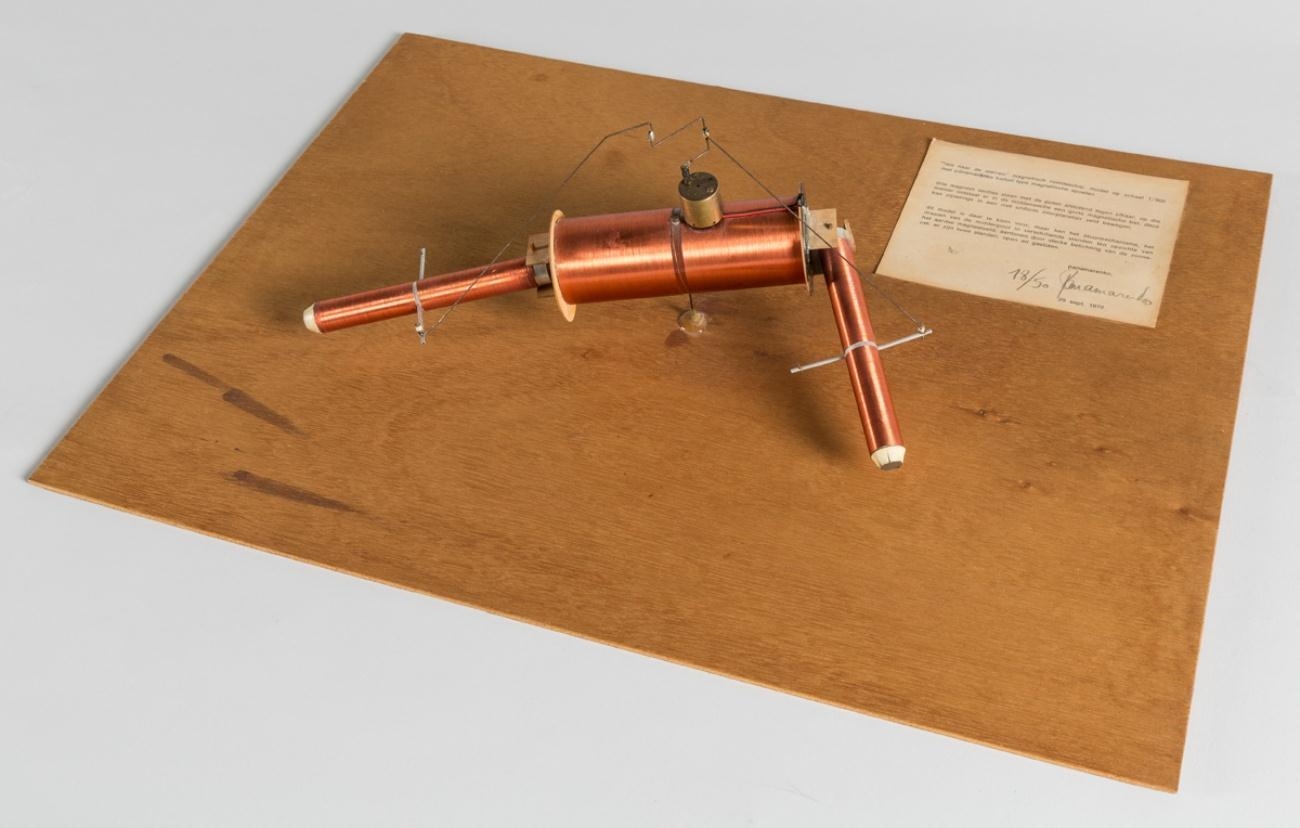
Panamarenko's Voyage to the Star (1979)
The inventor-artist Steven Pippin meditates on photography. He coats with
photographic chemicals the interior surfaces of everyday objects like washing
machines, toilets, and bath tubs, turning them into cameras. His ingenious experimentsinterweave the host object’s original functionality with that of a camera,
resulting in objects that occupy a difficult conceptual space outside the usual
polarization of functionalism and surrealism. They do produce sense, and we
understand them, but it is hard to say what exactly we understand about them.
In a world of artificial objects shaped almost entirely by functionalism, devices
like an Object with Which to See the World in Detail do not attempt to escape the
dictates (支配) of functionalism but instead work from within, extending it to include
the poetic and playfully subversive (figure 3.12).
Although often threatening, Ramette’s objects do not shock. Their critical content
is hidden beneath the poetry of construction and the humorous appreciation
of their function.
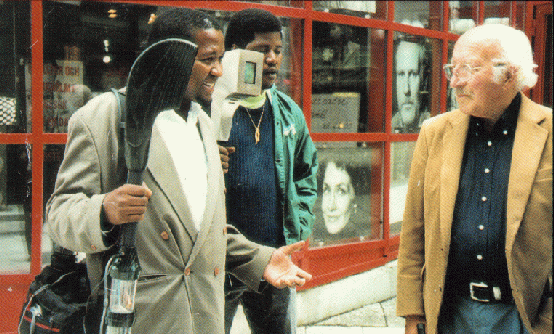
Wodiczko’s designs show how simple electronic technologies can challenge
preconceptions, but are at the margins of design. Although I see them as design
proposals not artworks it seems that, to hold a design view where electronic objects
function as criticism, one must move closer to the world of fine art because
the design profession finds it difficult to accommodate such research.
Hertzian Pathologies: Para-functionality and Electronic Objects
赫茲病理學
Between Rationality and Reality
The most effective examples in this chapter function as test pieces that, through
their marginalization, make visible the barriers limiting poetic experience in
everyday life.
透過邊緣化,將"限制詩意經驗" 的障礙,凸顯出來
Driven by poetry, imagination,
and intuition rather than reason and logic, they have their own rationality,
an alternative to our everyday scientific-industrial rationality.
...This is the role of
the para-functional as criticism.
Within this space lies the bizarre world of the “infra-ordinary,”
the subject of the next chapter
Homework 3:
Designing Para-functional Objects: (可用 AI 生圖)
誤用,錯用,邊緣化,已有之技術或設計,展現新奇,古怪,詩意之暢想。
(photos of mark-ups)
2023/10/23
2023年10月1日 星期日
week 5. Hertzian Tales (chap 2)
非人因 - 赫茲故事第二章
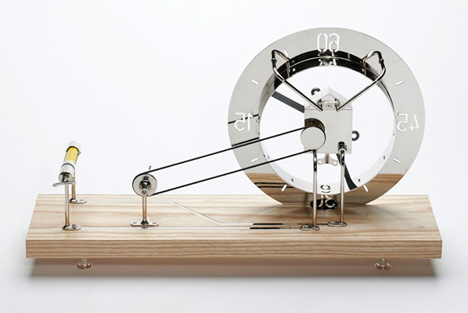
clock by Daniel Weil
User-Friendliness
Transparency
(In)human Factors
人被奴役化,嚴格來說,並不是被機器,也不是被建造和擁有機器的人,而是被機器所賦予的概念模型、價值、以及思想系統。
"This enslavement is not, strictly speaking, to machines, nor to the people who build and own them, but to the conceptual models, values, and systems of thought the machines embody." p.21
藉由詩意化人與電子物件間的距離,或許能促進敏銳的懷疑態度,而非不經思考的吸收電子物件所嵌入的價值與概念模型。
"By poeticizing the distance between people and electronic objects, sensitive skepticism might be encourage, rather than unthinking assimilation of the values and conceptual models embedded in electronic objects." p. 22
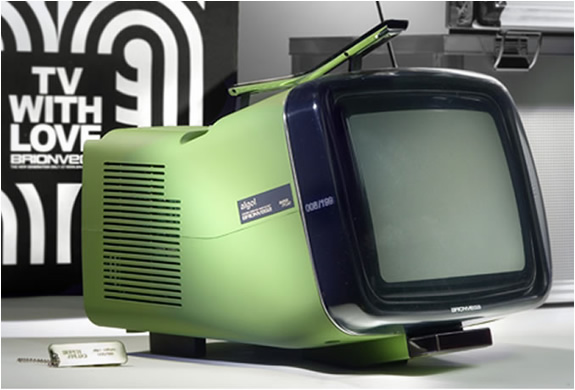
tv by Marco Zanuso
透過疏遠與異化,詩意化人與電子物件間的距離,將互動性置於透明與不透明之間,寵物與異形之間,散文與詩歌之間。
"This chapter looks at "poeticizing" the distance between people and electronic objects through "estrangement" and alienation," locating interactivity between transparency and opaqueness, the pet and the alien, prose and poetry." p. 22
Robinson 認為 Norman 的取徑產生了沒有混淆、不會令人失望的產品 (這很明顯是不夠的)。...... 吊詭的是,以使用者為中心,不只是要釐清人們如何描繪事物,而是絕對需要認清: 人們所互動的設計物,對我們如何思考,有巨大的影響。"
"Robinson argues that Norman's approach results in products that will not confuse or disappoint (which is clearly not enough). ... Paradoxically, user-centredness is not just figuring out how people map things, it absolutely requires recognising that the artefacts people interact with have enormous impact on how we think." p. 23
在人因的世界中,物件似乎必須被理解,而非被詮釋。......在人因社群中,將人與科技的關係簡化為認知的清晰程度...
"In the human factors world, objects, it seems, must be understood rather than interpreted. ... The reduction of the relationship between people and technology to a level of cognitive clarity by the human factors community..." p. 23
日常語言通常是資訊性的與工具性的; 如果資訊被成功的傳遞,或是行動被成功的挑起,這些字詞可以被視為
"透明的"。伴隨詩意功能而來的是某種不透明,因為作者既不傳遞資訊,也不尋求挑起行動。這可能帶來一種刻意的模糊。
"Everyday language is usually informative and instrumental;...since if a piece of information has been successfully passed or some action successfully instigated, the words by which this has been managed can count as "transparent." With the poetic function comes a certain opacity, for the writer is no longer passing information nor seeking to instigate action. There may also come an intentional ambiguity." p. 35
"The poetic function of language has as its effect that when we read literature we become
more aware of language than we are when we are confronted by language in its other
functions. To introduce another term dear to the formalists, in literature language is
“foregrounded. ... In the everyday use of language it will seldom be practical and may even be found impolite to “foreground” language.”"
根據 Viktor Shlkovsky,詩意藝術的功能,是對抗感知的慣例模式所支持的熟悉化。
"According to Viktor Shklovsky,..., the function of poetic art is to counter-act the familiarization encouraged by routine modes of perception." p. 35

fan heater by Winfried Scheuer
為了提供環境讓使用者反思電子物件的日常生活經驗,我們必須超越"根植於視覺的形的陌異",進而探索"根植於功能性的使用美學"...
"To provide conditions where users can be provoked to reflect on their everyday experience of electronic objects, it is necessary to go beyond forms of estrangement grounded in the visual and instead explore the aesthetics of us grounded in functionality..." p. 42

radio by Daniel Weil
想法與事物的適當匹配,特別在抽象想法凌駕實用性中,讓設計得以成為一種論述形式,產生詩意的創造,藉由挑戰某些法則(物理的、社會的、或政治的),而非確認這些法則,呈現出一種批判的功能。
"The fit between ideas and things, particularly where an abstract idea dominates practicality, allows design to be a form of discourse, resulting in poetic inventions that, by challenging lows (physical, social, or political) rather than affirming them, take on a critical function." p. 42
然而,我們自身與電子物件環境間的距離,也許可以被詩意化,針對環境所賦予的價值與概念,提倡一種懷疑的敏銳性。
"Instead, the distance between ourselves and the environment of electronic objects might be "poeticized" to encourage skeptical sensitivity to values and ideas this environment embodies." p. 42
2023年9月24日 星期日
week 4. Hertzian Tales (chap 1)
Introduction:

_________________________________________________________________________________
Chapter 1. The Electronic as Post-Optimal Object

.jpg)

建築與傢具設計已經成功的在文化沈思的領域運作了一段時間,然而,產品設計與市場的強力連結使得電子產品很少有文化功能上的沈思。
"Whereas architecture and furniture design have successfully operated in the realm of cultural speculation for some time, product design's strong ties to the marketplace have left little room for speculation on the cultural function of electronic products." p. xv
為了達成這個(目的),研究需要擴展設計美學的概念,以包含更詩意和形上的關係,關連到科技設計物的人造環境。
"In order to achieve this, research is needed into an expanded notion of design aesthetics that includes more poetic and metaphysical relationships with the artificial environment of technological artifact." p. xvi
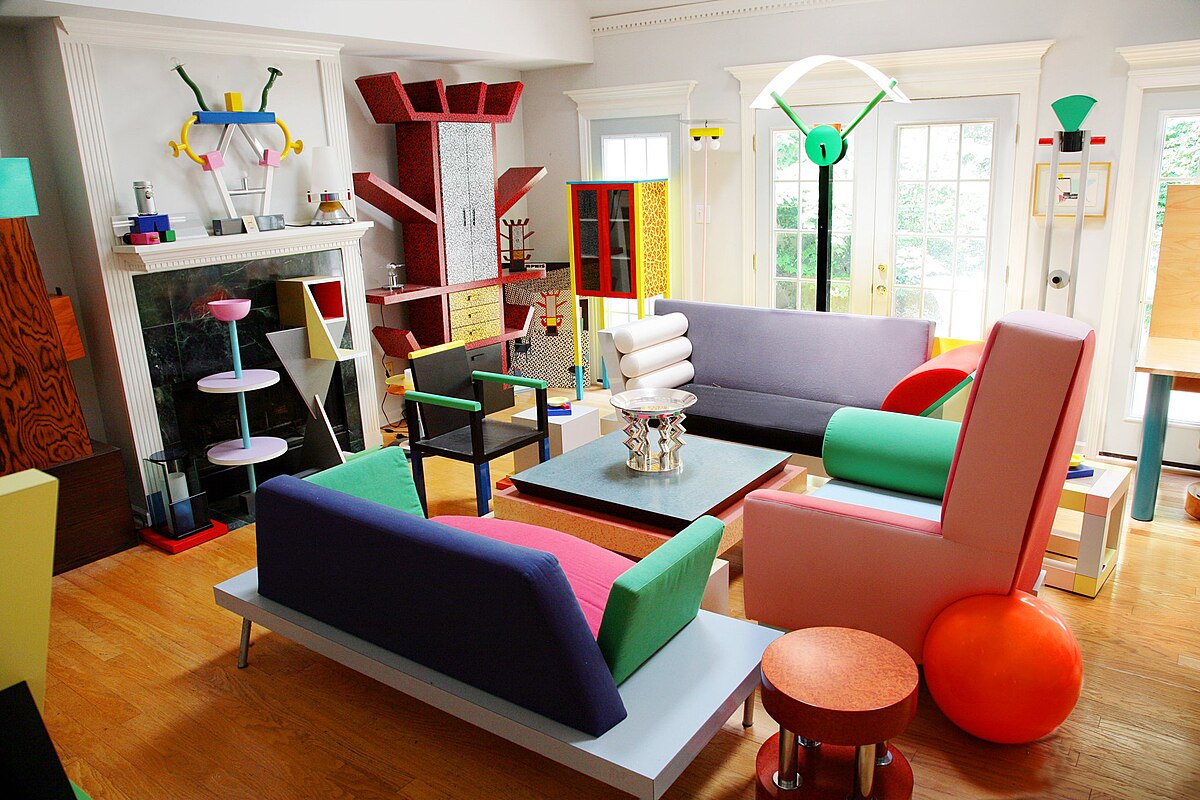
Memphis Group
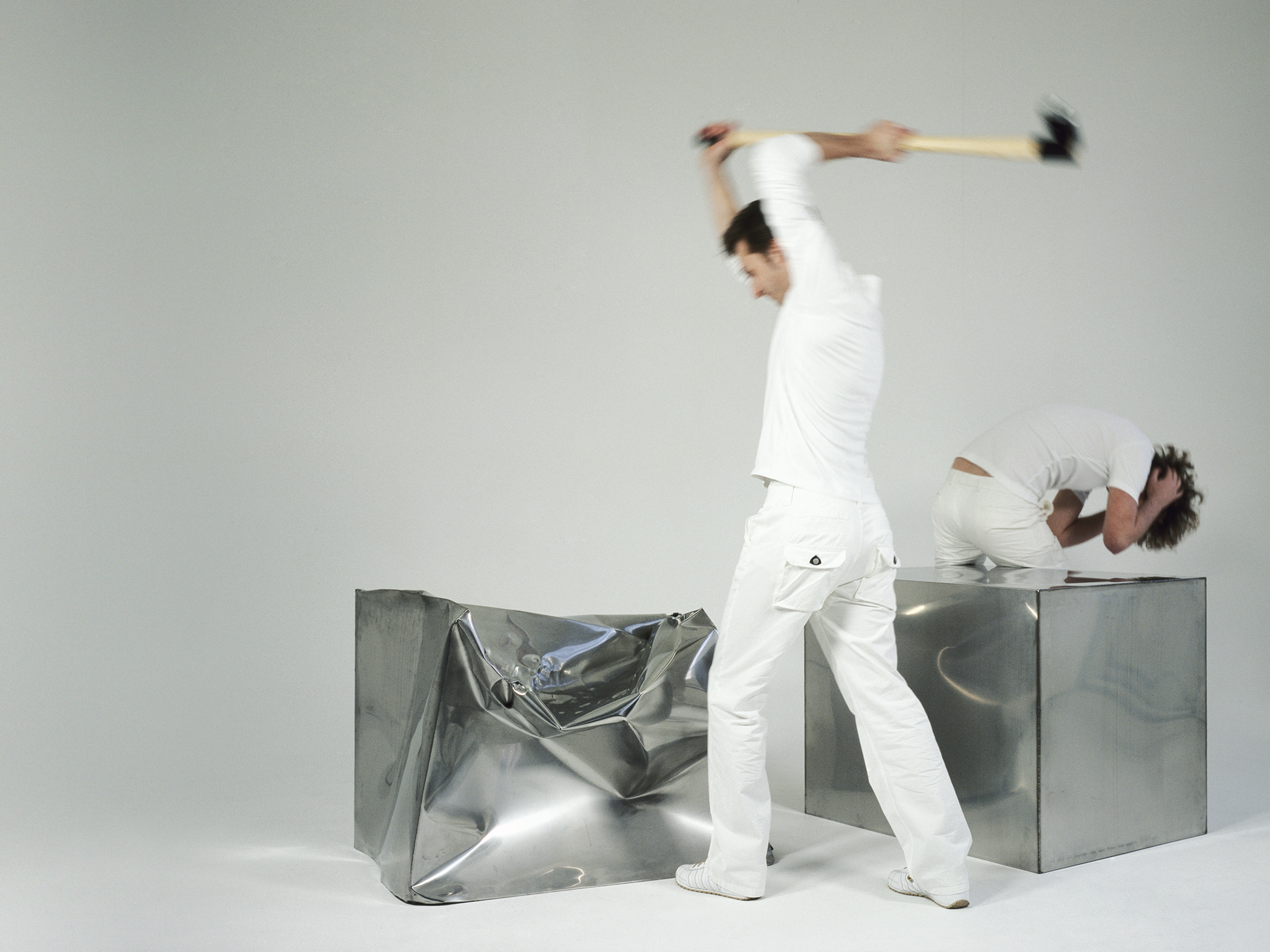
Do hit chair by Droog Design
即使是設計團隊發起的文化與美學的實驗,例如 Memphis,或者更近期的 Droog Design,也很少碰電子產品。
"Even the cultural and aesthetic experiments of design groups like Memphis, or more recently Droog Design, rarely touch on electronics." p. xvi
Mies Chair and Ottoman by Andrea Barnzi et al.
Andrea Barnzi 和其他 1960 年代與 1970 年代的實驗設計師,處理詩意居住模式中的設計物的角色,在建築學觀點的帶領下,發展出挑釁的研究取徑和立場,聚焦於新素材與表面的表達和語言學上的可能性。
"Andrea Branzi and other experimental designers of the 1960s and 1970s addressed the role played by design in poetic modes of inhabitation and, guided by an architectural perspective, developed provocative research approaches and positions focusing on the expressive and linguistic possibilities of new materials and surfaces." p. xvii
根據早期的義大利設計思考,Ezio Manzini 描述了設計師的角色,是提供新鮮的觀點。他認為設計願景的日子已經結束了,對烏托邦的厭倦已經開始了。然而,他建議設計師使用自己的技巧來視覺化另類的未來,呈現在公眾面前.....
"More recently, Ezio Manzini outlined a role for the designer that offers a fresh perspective that builds on earlier Italian design thinking. He suggests that the days of the design visionary are over, and a weariness with utopian vision has set in. Instead, he advises the designer to use his or her skills to visualize alternative future scenarios in ways that can be presented to the public,..." p. xvii
這些"實體物質故事"並不是烏托邦願景或藍圖 - 未來的明確模型太過於說教了。相反的,這些設計混合了批判主義與樂觀主義,提供"複雜的愉悅性",就像我們在其他有想像力的媒體中找到的,例如電影和文學,特別是那些探索真實與虛構邊界的。
"These "material tales" are not utopian visions or blueprints - clear-cut modeling of the future is too didactic. Instead, they mix criticism with optimism to provide the "complicated pleasure" found in other imaginative media such as film and literature, particularly those that explore boundaries between the real and the unreal." p. xvii
_________________________________________________________________________________
Chapter 1. The Electronic as Post-Optimal Object
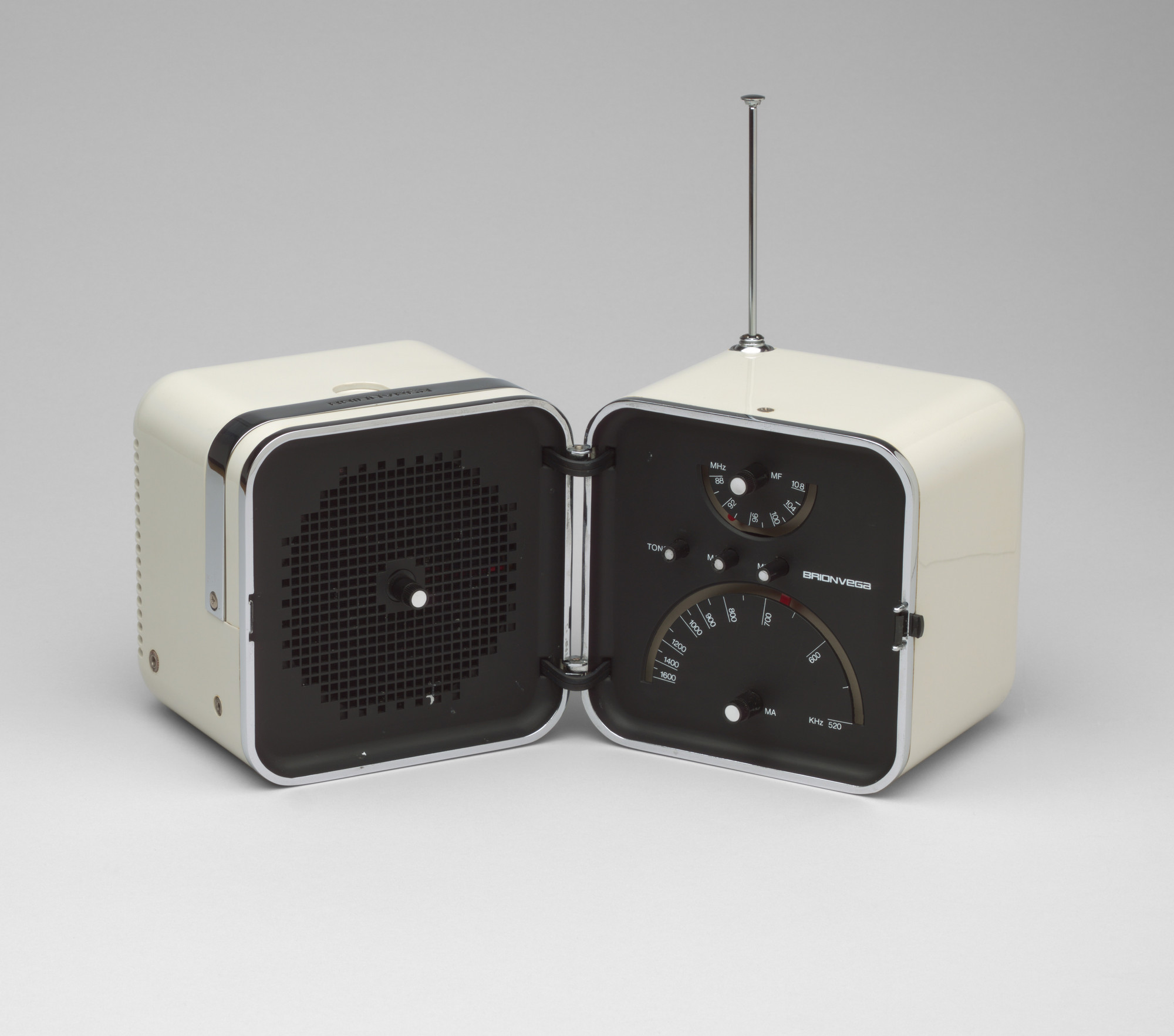
radio by Marco Zanuso
電子物件因此在這物質文化世界中佔據一個奇怪的位置,更像洗衣粉和感冒藥,而不像傢具與建築,並且像所有的包裝設計(尤其是符號的)一樣受制於語言學派。電子物件失落在影像與物件之間,它的文化認同是根據技術的功能主義和符號學的關係來定義。
"The electronic object accordingly occupies a strange place in the world of material culture, closer to washing powder and cough mixture than to furniture and architecture, and is subject to the same linguistic discipline as all package design, that of the sign. It is lost somewhere between image and object, and its cultural identity is defined in relation to technological functionalism and semiotics." p. 1
psychology of everyday things by Norman
人因社群非常值得被批判,他們發展出一套電子物件的觀點,主要從電腦科學與認知心理學領域,在電腦工業中極端的有影響力;舉例來說,Don Norman 的設計心理學。
"This is useful to critique the human factors "community," who have developed a view of the electronic object, derived from computer science and cognitive psychology, that is extremely influential in the computer industry; for example, Don Norman's (1988) The Psychology of Everyday Things." p. 2
人因取徑的一個嚴重的問題,是它毫無批判的接受 Bernard Waites 所稱的美國意識形態,或技術在意識上的合法性: 所有問題不管是自然的、人類本能的、或文化的,皆可以視為技術問題,可以透過客觀知識的累積,理性的解決。......如此,技術在美國意識形態中,成為工具理性的化身,技術官僚統治者的工具。
"A serious problem with the human factors approach though, in relation to this project, is its uncritical acceptance of what has been called by Bernard Waites (1989) the "American Ideology," or the ideological legitimation of technology: All problems whether of nature, human nature, or culture, are seen as "technical" problems capable of rational solution through the accumulation of objective knowledge, ..., so that technology, in the American Ideology, becomes "instrumental rationality" incarnate, the tools of technocracy." p. 2
然而,對物質文化最豐富的反思,並不是來自人類學或社會學,而是來自那些關心日常物件詩意的文學。巴舍拉的空間詩學提供了一種深受心理分析影響的角度,強調粗糙傢具的詩意面向,例如衣櫥與衣櫃。谷崎潤一郎的陰翳禮讚研究日本物件關於陰影和黑暗的面向,以及電在欣賞時所形成的效果。
"However, the most fruitful reflection on material culture is to be found, not in anthropology or sociology, but in literature concerned with the poetry of everyday objects. In The Poetics of Space, Gaston Bachelar (1969) offers an analysis, influenced by psychoanalysis, that emphasises the poetic dimension of humble furniture such as wardrobes and chests of drawers; Jun'ichiro Tanizaki's (1991) InPraise of Shadows considers the Japanese object in relation to shadow and darkness, and the effects of electricity on their appreciation;..." p. 5
一旦這些原型要素受制於大量生產所要求的極端理性化過程,它們就被化約成抽象的、極端微小化的電子零件。基於物質的真相,它們的現代主義詩意,已經喪失了。
"But once these prototype elements have been subjected to the extreme rationalization required by mass production, they become reduced to abstract ultra-miniaturized electronic components. Their modernist poetry, based on truth to materials, is lost." p. 7
但一般來說,設計師探索新素材美學面向的努力,並不如工程師探索功能可能性的努力來得多。這領域中大部份的作品並不鼓勵詩意與文化的可能性,結合到實用性與技術性的面向。 結果就是產出一整串毫無想像力的提案。
"But generally, designers have not exploited the aesthetic dimension of new materials with the same energy that engineers have exploited their functional possibilities. Most work in the area does not encourage poetic and cultural possibilities to converge with practical and technical ones. The outcome is a stream of unimaginative proposals." p. 9
marble answer machine by Durrell Bishop
Durrell Bishop 的作品一個可能有意義的視野: 現存物件被當作實體圖像使用,資料的實體物質再現,同時指向被操作資料的實用面向與詩意面向。......雖然很實際的被應用,Bishop的思考與文化脈絡是接合的,而技術在其中被使用。一種"用的美學"湧現了。
"The work of Durrell Bishop offers a vision of what this might mean: existing objects are used as physical icons, material representations of data that refer to both the pragmatic and poetic dimensions of the data being manipulated.... Although applied very practically, Bishop's thinking engages with the cultural context in which the technology is used. An "aesthetics of use" emerges." p. 17
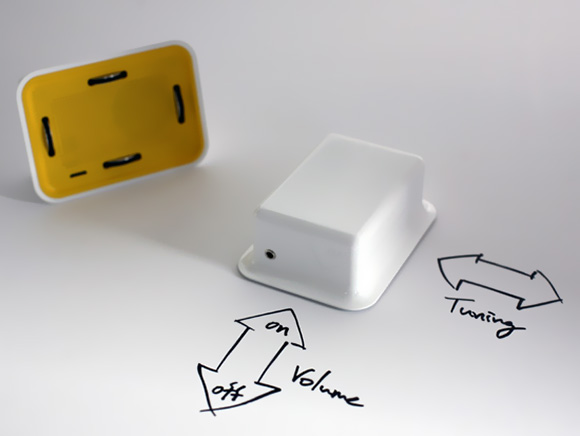
R1 radio by Chia Li-Gu
電子物件設計師最困難挑戰,並不是技術與符號學的功能性,這些表現的優化程度都已經可以達成,而是在其他尚未被充分研究的領域: 形上學、詩學、以及美學。
"The most difficult challenges for designers of electronic objects now lie not in technical and semiotic functionality, where optimal levels of performance are already attainable, but in the realms of metaphysics, poetry, and aesthetics, where little research has been carried out." p. 20
Oracle by Robert Rauschenberg
本書的立場是,設計研究應該為電子物件探索新的角色,促進更詩意的居住模式: 透過概念式產品整合美學經驗與日常生活的一種社會研究形式。在這個實用性與功能性被視為理所當然的世界中,後優化物件的美學能夠提供新的日常生活經驗,新的詩意面向。
"The position of this book is that design research should explore a new role for the electronic object, one that facilitates more poetic modes of habitation: a form of social research to integrate aesthetic experience with everyday life through "conceptual products." In a world where practicality and functionality can be taken for granted, the aesthetics of the post-optimal object could provide new experience of everyday life, new poetic dimensions." p. 20
2023年9月17日 星期日
week 3. critical dialogue and phenomenology
Critical dialogue: interaction, experience and cultural theory
1.
"This workshop will explore the
ways in which HCI can benefit from a constructive
dialogue between critical theory and experience in
questions of design and evaluation."
2.
"
HCI has broadened from usability to experience and
from productivity to fun, affect, aesthetics, and ethics.
Experience, culture, enjoyment, design, and other
related terms are now much used but under-theorized
concepts in HCI. Yet they are all associated with rich
histories of scholarship in other domains, and they
include their own epistemologies, approaches, and
outputs. Leveraging these terms in HCI will require
thoughtful engagement with these traditions, and in
particular, critical theory"
3.
critical theory...
"These include: semiotics (the study of
signs and symbols), hermeneutics (the study of
interpretation and meaning), structuralism (the study
of underlying structures of cultural artefacts), post
structuralism (the denial of the existence of such
structures), deconstruction (well this is getting
complicated now), psychoanalysis (yes and perhaps
each of these deserves a paragraph on their own),
feminism, Marxism, and postmodernism. "
4. "Since post-structuralist semiotics critiqued the notion
that there was a direct correspondence between a
cultural artifact and any single interpretation of it, ideas
based in critical traditions such as reader-response
theory have supplemented traditional semiotic readings
of how interaction takes place. These approaches argue
that meaning is emergent, constructed through a
“performance” of the text in a particular context.
Clearly this kind of theory is more difficult to implement
as a set of design guidelines and perhaps for this
reason hermeneutics has received less attention in HCI
(however, see for instance [12]). "
5.
"When Winograd and Flores followed Heidegger in
rejecting the view that things are the bearer of
properties independent of interpretation [18],
phenomenology’s emphasis on both phenomena and
the consciousness experiencing them began to be
influential in HCI, e.g. [8][10]. When attention turned
from usability to user experience, connections to critical
theory became more frequent and complex. McCarthy
and Wright’s [14] book Technology as Experience drew
extensively on the Russian literary critic and
philosopher Mikhail Bakhtin and his problematic
relationship with formal theory and preference for a
decentred dialogue grounded in the particularities and
uncertainties of lived experience."
4. "Since post-structuralist semiotics critiqued the notion
that there was a direct correspondence between a
cultural artifact and any single interpretation of it, ideas
based in critical traditions such as reader-response
theory have supplemented traditional semiotic readings
of how interaction takes place. These approaches argue
that meaning is emergent, constructed through a
“performance” of the text in a particular context.
Clearly this kind of theory is more difficult to implement
as a set of design guidelines and perhaps for this
reason hermeneutics has received less attention in HCI
(however, see for instance [12]). "
5.
"When Winograd and Flores followed Heidegger in
rejecting the view that things are the bearer of
properties independent of interpretation [18],
phenomenology’s emphasis on both phenomena and
the consciousness experiencing them began to be
influential in HCI, e.g. [8][10]. When attention turned
from usability to user experience, connections to critical
theory became more frequent and complex. McCarthy
and Wright’s [14] book Technology as Experience drew
extensively on the Russian literary critic and
philosopher Mikhail Bakhtin and his problematic
relationship with formal theory and preference for a
decentred dialogue grounded in the particularities and
uncertainties of lived experience."
Technology as experience
Where the Action Is
Reference:
1. 社會科學的理路 pp. 352-353, 365-366, 384-387
2. 反身性方法論: 質性研究的新視野, pp. 60-61
critical practice
agenda: 例如媒體四大律、揭露與排除四個 stumbling blocks (1. Blinders of assumption 2. Fallacy of intuition 3. The “U.S.” problem 4. The rush to give advice)
"By definition, critical dialogue is the ongoing “collective inquiry into the processes, assumptions, and certainties that comprise everyday life,” (Schein, 1993)."
注意避免 "Flaws in Thinking"
EX 2.
兩兩同學一組, 可以用中文, 為以下互動設計作品產生 批判對話.
互相輪流發言, 並針對方前一次的發言進行批判對話.
對話紀錄至少 400 字 (中英文皆可)
deadline: 2023/10/2
兩兩同學一組, 可以用中文, 為以下互動設計作品產生 批判對話.
互相輪流發言, 並針對方前一次的發言進行批判對話.
對話紀錄至少 400 字 (中英文皆可)
deadline: 2023/10/2
2023年9月9日 星期六
week 2. the three paradigms of HCI
The Three Paradigms of HCI
1. 1st paradigm: engineering/human factors
2. 2nd paradigm: cognitive science
3. 3rd paradigm: phenomenological matrix:
"...addressing issues that are bad fits to prior paradigms, ranging from embodiment to situated meaning to values and social issues."
"These include participatory
design, value-sensitive design, user experience
design, ethnomethodology, embodied interaction, interaction
analysis, and critical design." (p. 2)
"a third (“3rd”) paradigm, which treats interaction not as a
form of information processing but as a form of meaning
making in which the artifact and its context at all
levels are mutually defining and subject to multiple interpretations." (p. 2)
強行將舊的 paradigm 套用到 HCI 的後果:
"when force-fitting new insights to old paradigms
CHI fails to capitalize on the full value of these approaches." (p. 3)
沒有清楚的認識論, 會限制 HCI 的發展:
"(3) the lack of clarity about the
epistemological distinctions between paradigms is a
limiting factor in the development of the field,..." (p. 3)
Thomas Kuhn's theory of the structure of scientific revolutions:
"A paradigm shift, then, is accompanied by a shift
in the examples which are considered to be central to
the field." (p. 3)
"In particular, Agre argues, following a long line of research
in scientific metaphor, that technical fields tend
to be structured around particular metaphors which
suggest the questions that are interesting to ask and
methods for arriving at answers to them. So, for example,
the metaphor underlying cognitive science –
that human minds are like information processors –
suggests questions it could be interesting to ask - how
humans process their input, how they represent information
internally, how they access memory, etc. - and
also suggests methods for finding answers to those
questions, for example that we can effectively model
human mental activity using computational code and
validate these models by comparing computational and
human input and output." (p. 4)
"Following Agre, we argue that central to each paradigm
in HCI is a different metaphor of interaction. Each such
metaphor introduces ‘centers’ and ‘margins’ that drive
choices about what methods are appropriate for studying
and designing interaction and for how knowledge
claims about interaction can be validated." (p. 4)
為何 usability study 對 non-task-oriented interaction 無效?
"A fourth set of issues arises out of the domain of nontask-
oriented computing. These approaches tend to
be bad fits to the 1st and 2nd paradigms, whose methods
tend to require problems to be formalized and expressed
in terms of tasks, goals and efficiency - precisely
what non-task-oriented approaches are intended
to question. It is difficult, for example, to apply usability
studies to ambient interfaces, since standard
evaluation techniques are ‘task-focused’ in the sense of
asking users to pay attention to and evaluate the interface,
precisely what the system is devised to avoid." (p. 4)
Embodiment 在三種 paradigms 的角色:
1. In human factors, attention is paid to such factors as the fit of a mouse to the human hand or the amenability of particular font sizes to be easily read.
2. Cognitively based work in HCI has laid out physical constraints that usefully inform interface
design such as the speed at which humans are able to react in various situations.
3. Embodiment in the 3rd paradigm is based on a different, central stance drawing on phenomenology: that the way in which we come to understand the world, ourselves, and interaction derives crucially from our location in a physical and social world as embodied actors.
"A focus on embodied interaction
moves from the 2nd paradigm idea that thinking is
cognitive, abstract, and information-based to one
where thinking is also achieved through doing things in
the world, for example expression through gestures,
learning through manipulation, or thinking through
building prototypes." (p. 7)
3rd paradigm 的 中心是 現象學觀點, 而非物理的體現性:
"Despite the centrality of embodied interaction to the 3rd
paradigm, it would be a mistake to take physical embodiment
– i.e. having a body - as its central, defining
characteristic. Rather, what is central is a phenomenological
viewpoint, in which all action, interaction, and
knowledge is seen as embodied in situated human actors.
This position leads to a number of intellectual
commitments that contrast with those taken by the first
two paradigms." (p. 7)
意義在三種 paradigms 中的角色:
"meaning, ignoring it unless it causes a problem, while
the 2nd interprets meaning in terms of information
flows. The 3rd paradigm, in contrast, sees meaning and
meaning construction as a central focus. It adopts the
stance that meaning is constructed on the fly, often
collaboratively, by people in specific contexts and
situations, and therefore that interaction itself is an
essential element in meaning construction."
3rd paradigm 的 central metaphor:
" ...whose central metaphor is interaction
as phenomenologically situated." (p. 9)
1st paradigm: reduce error
2nd paradigm: more efficiently
3rd paradigm: situated meaning-making
Different Ways of Knowing
"The three issues described previously – limited and inappropriate measures of success, acceptable methods,
and recognition of innovation – can be traced to a lack of awareness of the epistemological distinctions between the paradigms,..."
see Table 2: Epistemological distinctions between the paradigms
Objective vs. Subjective Knowledge
Generalized vs. Situated Knowledge
Information vs. Interpretation
“Clean” vs. “Messy” Formalisms
所有的 paper 都應該交代 underlying paradigms:
"We would expect that calling out the underlying paradigm
will become a standard part of every publication
in our field." (p. 17)
參考:
EX 1. short essay
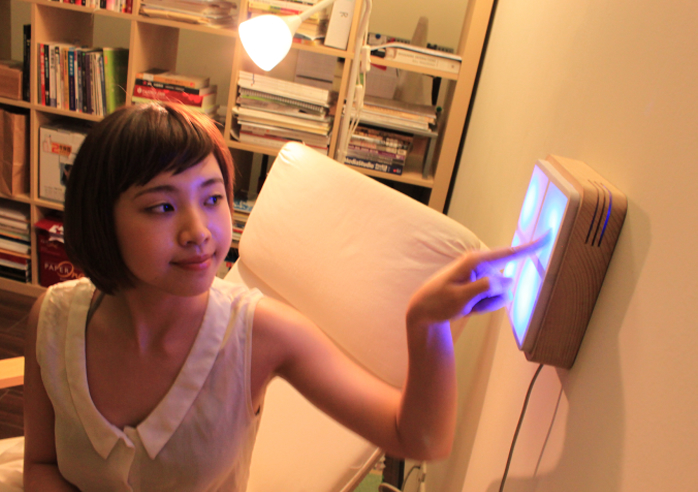
Critically introduce "InTouch" project with three paradigms respectively. (including 1st, 2nd, 3rd paradigms, at least 500 words in total) Deadline 2023/9/25
Reference:
2023年9月3日 星期日
week 1. Introduction
Interaction design paradigms:
互動設計派典是是什麼?
2. Guba, E.G., & Lincoln, Y.S., Competing Paradigms in Qualitative Research
3. Heron, J., & Reason, P. (1997). A Participatory Inquiry Paradigm. Qualitative Inquiry, 3(3), 274-294
Questions:
1. What is "Participatory Design" in your impression?
2. What is Participatory Paradigm? (reading and discuss next week)
3. Participatory 派典與其他派典最大的不同為何?
4. What is Critical Design?
英國:
Dunne & Raby
Interaction design paradigms from Rung-Huei Liang
Critical Practice as a method of inquiry?
How to make good critical practice ? Critical Practice
1. 社會科學的理路。(圖 1-1 主要典範基本信念)Critical Practice as a method of inquiry?
How to make good critical practice ? Critical Practice
互動設計派典是是什麼?
2. Guba, E.G., & Lincoln, Y.S., Competing Paradigms in Qualitative Research
3. Heron, J., & Reason, P. (1997). A Participatory Inquiry Paradigm. Qualitative Inquiry, 3(3), 274-294
Questions:
1. What is "Participatory Design" in your impression?
2. What is Participatory Paradigm? (reading and discuss next week)
3. Participatory 派典與其他派典最大的不同為何?
4. What is Critical Design?
英國:
Dunne & Raby
Hertzian Tales
Readings:
Matt Malpass
Critical Design in Context: History, Theory, and Practice
美國:
Jeffrey Bardzell & Shaowen Bardzell
What is "critical" about critical design?
What is "critical" about critical design?
Humanistic HCI
北歐:
Slow Technology
Difficult Forms
Readings:
1. Paper reading (1/2)
2. Critical writing (1/4)
3. Critical design proposal (1/4)
Grading:
60 % Projects and reports
40 % homework presentation and discussions
Grading:
60 % Projects and reports
40 % homework presentation and discussions
訂閱:
文章 (Atom)