2023年11月23日 星期四

week 13. the object as discourse

The object as discourse 

The Object as Discourse 1999

p1.

1. In short, as a result of what might be termed 'methodological intimidation' (方法論上的恐嚇), research work carried out in colleges of art and design stands a very real risk of losing those qualities of originality, iconoclasm (破除偶像), energy, style and wit which have characterised the best of art school culture since the 1950s.

p. 3

2. Rejecting the electronic product designer's traditional role as semiotician, he attempts to map a new conceptual territory on which to explore the electronic as 'post-optimal object', turning his attention away the familiar attempt to achieve 'optimum performance levels' and towards more fundamental philosophical issues.

3...., Dunne's research focuses on the relationship between electronic objects and the realms of poetry and aesthetics.

4. Design is seen as a form of socio-aesthetic research towards the integration of aesthetic experience and everyday life through the development of conceptual products rather than working prototypes of models which attempt to simulate a final product designed for mass production.

5. As a PhD by project, Dunne's work uses research through the design process to explore the development of an approach that allows the development of critical responses and a sceptical sensibility towards the ideological nature of design with the purpose of stimulating original aesthetic possibilities for new kinds of electronic object.

7. The ultimate aim of the research project is the development of electronic products which by'making strange' (陌異化) or 'poeticising the distance' (詩意化距離) between ourselves and our artefactual environment, facilitate sociological awareness, reflective and critical involvement with the electronic object rather than its passive consumption and unthinking acceptance.

8. Rather than aiming for transparency, as would a conventional applied researcher/product designer, his (Dunne's) attempt to enhance the critical distance between the electronic object and the human subject through the introduction of 'poetic' techniques of aesthetic 'estrangement' is reminiscent of the writing of Frankfurt School theorists such as Walter Benjamin or the methods of avant-garde theorist/performers such as John Cage,...

p. 4

9.... his idea of using the process of invention as a mode of discourse (以發明過程為論述), a poetic invention (詩意的發明) that, by stretching established conventions, whether physical, social or political, rather than simply affirming them, takes on a radical critical function, a material critical theory of what Dunne terms a 'parafunctionality.'

10. To this extent Dunne's work offers a positive and radical model of the action researcher in design as a critical interpreter of design processes and their relationship to culture and society rather than a skilled applied technician preoccupied by the minutiae (細節) of industrial production or a slick but intellectually shallow semiotician.

11. In Dunne's case the electronic object produced as the studio section of the doctorate is still 'design' but in the sense of a 'material thesis' (實體論文) in which the object itself becomes a physical critique (實體批判).


Final Project:

deadline 12/18

Themes: Re-designing Everyday Objects with Criticality

Forms: Diegetic prototypes, Markups, Fictional Design, Old things modification, ... as well as sketching & proposal

Documents: 1. introduction 2. critical review 3. project details 4. critical reflection 5. discussion, 6. conclusion. (total 800 words in English or 1200 字中文) upload to Google cloud

Presentation: pptx or slides in 10 mins 


2023年11月12日 星期日

week 11. what is critical about critical design

What is "critical" about critical design?


So if we want to understand what makes critical design
“critical,” the preceding list gives us our answer: a design
research project may be judged “critical” to the extents
that it proposes a perspective-changing holistic account of
a given phenomenon, and that this account is grounded in
speculative theory, reflects a dialogical methodology, improves
the public’s cultural competence, and is reflexively
aware of itself as an actor—with both power and constraints—
within the social world it is seeking to change. (p. 3304)

2023年11月5日 星期日

week 10. critical design & critical theory


Critical design and critical theory: the challenge of designing for provocation


http://dl.acm.org/citation.cfm?id=2318001


1. p288
   Designers' judgement vs. analysis & reasoning activity


Over the past two decades, there has been increasing interest in design in human-computer interaction. Of particular
concern is constructive design research [27], also known as
research through design [16, 18, 33, 35], where design activity in the form of constructing artifacts becomes a central
research activity. In this work, design experience in the
form of designers’ judgments is equally important to the
analysis and reasoning activities that are common to all
kinds of research.

2.
   constructive design 可以從 “想像未來" 展開, 不一定要 fieldwork, theory...


Like other kinds of research, constructive 
design research may start from the result of fieldwork, theories of human behavior, or application of a particular design
approach, but often, it can start with just imagining future 
states, and in HCI, how technology can improve the current
state of human existence.

3. critical design 的定義, by Dunne:
  吸引 viewers 進入 the world of ideas 而非 objects.


producing conceptual electronic products that encourage
complex and meaningful reflection on inhabitation of a
ubiquitous, dematerializing, and intelligent environment: a
form of social research to integrate critical aesthetic experience with everyday life…. I hope in my approach I have
retained the popular appeal of industrial design while using
it to seduce the viewer into the world of ideas rather than
objects. Industrial design locates its object in a mental
space concerned with identity, desire, and fantasy and
shaped by media.... Again, I hope this remains intact but is
subverted to challenge the aesthetic values of both consumers and designers. (p. 147)

4. p. 289


In short, critical design
proposes an approach to provocation(挑釁), rather than design as
rearranging surface features according to the latest fashion
while obfuscating (使困惑) the norms and conventions inscribed in
the designs and their use.


5.


A new
book on constructive design research details three different
approaches: Lab, Field, and Showroom [27].

...

In the  Field examples, design researchers
employ lightweight versions of social science methods to
understand the current state, and then use methods from
design practice to create new things that express a preferred
state.


 Showroom, Koskinen et al.’s term for critical
design, is different. The description in the book talks about
the theoretical influences, but does provide a sketch of how
methods might be put together to complete a project.

6. In other words,
one might desire a description of critical design as an approach to account for both (a) productsthat generate dilemmas or confusions among users in such a way that users
are encouraged to expand their interpretative horizons or
rethink cultural norms; and (b) the sorts of design processes
that could lead to those kinds of products. 

7.  p. 290

  4 種 整合 critical theory 和 design 的 困難:

(1) Critical theory offers little insight about how to make 
things.

  CT: a verbal tradition,  new theories, critiques, and insights
  D: an embodied making tradition,  design materials

(2) Critical theory tends to be anti-method.

(3) Critical theory emphasizes the meanings and effects of cultural artifacts over their creation.
(4) Critical theory generally tends not to focus on the author of  a work as an individual creative agent

critical theory 不關心 intention (of author)

But if design can be defined as intentional change [30],
critical theory’s disinterest in intention becomes a limitation
of its applicability to design.


8.
  我們已經習慣  不受限於 creators' intention


We, too, were trained to seek
to understand the effects of cultural artifacts without limiting our inquiry to what their creators intended. Likewise,
we can understand why Gaver, like Derrida before him,
rejects “method” as a description of his approach. 


9.
What we seek, then, is a middle ground between critical
design as an elitist mystery, like art itself, and critical design as a step-wise cookbook description of design practice.
We recognize that the subjective expertise of the designer is
a crucial factor that no method, approach, set of practices,
etc., can capture or simulate.

THE CRITICAL DESIGN PROCESS
10.
  先找出 挑釁的點

Among
the most basic decisions in a critical design project is identifying which aspects of the present world we wish to provoke, a process that can be enriched through an engagement
with relevant critical theory literatures.


11.  2 cases of critical design

Significant Screwdriver (SS)


As  a starting point, it seemed to us that design could be used to  transgress rather then reinforce social norms.

Whispering Wall (WW)

Another place where we might transgress rather then reinforce social norms was in the space of a health club or gym.


12.


Breakdowns in operationalizing critical theory in design
often occur because whereas theory is often descriptive,
providing frameworks or models that serve as organizing
constructs [17], design itself is actionable, creating prototypes that suggest preferred future states. As in any design
activity, in making the leap from descriptive to generative,
the designer must make judgments about how to proceed.

13.

This breakdown exposes that
in critical design, the linkage between (verbally-based) theory and the embodied design practices of decision-making
and observations of use in deployment is problematic.
Overcoming this is not something that can be derived from
critical theory resources alone (i.e., in this case, feminist
theory only got us so far), due to the fact that design as critical resource  and  textual discourses about design  are different kinds of epistemological resources. 

14. p.294

   輕微的  陌異化 是關鍵


As
Dunne and Raby write, “A slight strangeness is the key—
too weird and they are instantly dismissed, not strange
enough and they’re absorbed into everyday reality…” [15,
p.63].

輕微的  陌異化  可以考量跨越 conceptual, functional, material, aesthetic 等等層面.

Our experience suggests that achieving this “slight
strangeness” is anything but straightforward, as it plays out
across conceptual, functional, material, and aesthetic dimensions of design in complex ways. Often, designers rapidly generate and iterate on solutions as a way to reason
about a problem space; when the problem space itself is
transgression and provocation, some of our more familiar
strategies will undoubtedly come up short.


15.
  how design students do vs. engineering ones:


As designers, we have considerable experience evaluating
sketches, directions, and prototypes in the context of design
briefs and situations—even ill-defined ones—both in the
studio and in the field.

16.


Provocation can be socially uncomfortable, and subjects
may not expect to be provoked when consenting to participate in a study. Researchers need to be prepared for and be
ready to handle such discomfort.


17.

Indeed, it was through conversations in which he was initiated as a peer researcher, rather than research subject, that
this participant gradually began to buy into it.

18. p. 295


Both of these patterns suggest that in a critical design study,
not only does the research destabilize the topics of inquiry,
but it also destabilizes the relationship between researchers
and research participants.


19.

In short, design researchers deploying
critical designs need to be prepared for everything to be
challenged, negotiated, and subject to fundamental change. 

20.

Critical design as a discursive methodology


Critical Design 中, 連 framing 也是 unknown:

In traditional user research, the research objective is to establish user needs and requirements. What is unknown are
relevant behaviors, attitudes, and functional needs of a target population. In critical design research, the framing itself 
is part of the unknown.


...

We were not out to discover folk theories of gender in
gyms and homes; the critical designs were meant to transgress them and provoke discussionabout that. 

21.
  重點不是收集使用者所說的話, 而是 協同思索與推思索與推論

we
didn’t just collect what they said but engaged with them
intellectually—the result was a practice of collaborative 
speculative reasoning grounded on a critical design that was
itself informed by a combination of cultural theories and
folk theories.

22.
   3 lessons from critical designs:

(1) Provocativeness
(2) Deep relationship

When using critical design in the future, we will design the
prototypes and interactions with participants with the goal
of developing a deeper relationship. We allow for repeated
and rich encounters in order to explore how participants’
insights and behaviors change as they use the design to
probe the research team’s intentions. 

(3) Fluidity of research plan

..., it seems that critical design
might best use theory to sensitize designers and to inspire
the intention of the provocations, but that we cannot and
should not force that theory to delimit the trajectory of the
work once it has been placed into the world. We raise this
as a concern for others who may wish to use critical design
as a way of operationalizing a theoretical framework.
Case Studies:
 "Make It Critical" card deck

2023/11/20
Create your own "Make It Critical" cards
Present and Practice in the class in group

2023年10月29日 星期日

week 9. humanistic HCI

Humanistic HCI in ACM Interaction

專家主觀性 expert subjectivity

1. HCI reaches out. 
"Key examples include the rise of aesthetics as an approach to user experience design [2]; the introduction of “reflective HCI” [3] to reposition the field with a more self-critical stance; as well as the use of feminist [4], queer [5], and postcolonial [6] approaches to emancipatory computing."

2. The humanities reach in.
" As alternatives, Winograd and Flores introduced Heideggerian phenomenology, biological accounts of cognition and language, and speech act theory to HCI. Offering an epistemological critique of the field as a whole and introducing an alternative epistemological stance are philosophical activities. It is easy to see that Winograd and Flores’s seminal work was in fact humanistic HCI, even if no one at that time was using the term."

3. What is Humanistic HCI?
". It is not the same as digital humanities, which is humanistic research supported by digital technologies, and which is by and large practiced by humanistic scholars (see, e.g., [9])."

"Humanistic HCI operates in the opposite direction: It is HCI research and practice that is supported by humanistic practices, theories, and methods."

4. History and tradition
"Many HCI systems are presented with little to no reference to their own historical genealogies, and the field itself has no significant histories beyond a generally shared sense that HCI has had three paradigms or waves [13,14]."

" Our expectation is that interaction design and/or HCI (whatever their relation is or will become, exactly) will develop much more of a historical sensibility in the coming decade."

5. Conceptual analysis
" During its rise in the 19th century, science began to displace philosophy as the knowledge discipline best able to account for the world. What was philosophy’s role in a scientific era? One answer was that philosophy ceased to provide doctrines and instead became an activity directed at the clarification of thoughts. As the early Ludwig Wittgenstein wrote, “The object of philosophy is the logical clarification of thoughts. Philosophy is not a theory but an activity. A philosophical work consists essentially of elucidations” [15]. Philosophy was thus moving away from producing original systems and toward the disciplined analysis of the concepts we think with."

Summary:
" overall humanistic dispositions: the attempt to take on a situation or work that is in some sense confusing; to do so holistically (rather than analyzed and operationalized into well-defined parts); to bring clarity to it; and to do so in a way that orients itself toward emancipatory change (diversely defined)."

Humanistic HCI  Practices and Methods
1. Excursus: The expert subject.
2. Interaction criticism.
3. Critical discourse analysis.
   " HCI examples of such critiques include studies of cultural probes [25], affective computing [26], and sustainable making [27]."
4. Critical social science
5. Design futuring.
 "These strategies are commonly deployed in speculative design, critical design, design fictions, and science and utopian fiction"
6. Emancipatory HCI.


2023年10月15日 星期日

week 7. Hertzian Tales (chap 3)

 泛功能 - 赫茲故事第三章


The prefix “para-” suggests that such design is

within the realms of utility but attempts to go beyond conventional definitions

of functionalism to include the poetic.

泛功能(超越功能)超越傳統定義,包含了詩意。


Eccentric Objects: Para-functionality and Non-design

Some naive, curious, or eccentric objects, outside the world of conventional design,

unintentionally embody provocative or poetic qualities that most product

designs, even those intended to provoke, seldom achieve.

某些天真的、好奇的、古怪的物件,落在傳統設計之外,它們偶然地賦予了挑臖的和詩意的品質,是多數產品設計即使刻意追求也很少達成的。


This is also the case with “Chindogu”. Their individual

elements are recognizable, but the reason for combining them is at first bewildering.

The meaning behind the object is derived from “sense-fiction”: the objects

make functional sense, but are still useless.


Forbidden Emotions: Para-functionality and Design

In a field where “product design is thoroughly integrated in capitalist production, [and] bereft of an independent critical tradition on which to base an alternative,” only a few

designers use the function of products as criticism.

在產品設計完全整合在資本主義產製的領域,失去了獨立批判的傳統,只有一些設計師使用產品功能作為批判。

...what Baudrillard has called the “crisis of functionalism.”

Baudrillard (1981) argues that the acceptance of functionalism as an arbitrary

but dominant rationality gave rise to an irrational counter-discourse that

moves between the two poles of kitsch (庸俗作品) and surrealism:

The surrealist object emerges at the same epoch as the functional object, as its derision (嘲笑)

and transgression. Although they are overtly dys- or para-functional, these phantasmic (幻想的)

objects nevertheless presuppose—albeit in a contradictory sense—the advent of functionality

as the universal moral law of the object, and the advent of this object itself, separated,

autonomous and dedicated to the transparency of its function. When one ponders 

it, there is something unreal and almost surreal in the fact of reducing an object to its

function: and it suffices to push this principle of functionality to the limit to make its

absurdity emerge. This is evident in the case of the toaster, iron or “undiscoverable objects”

of Carelman. (192–193)


Jacques Carelman's Impossible Objects

Catalogue of Extraordinary Objects


philip garner alienature

Heterotopian Gadgets: Para-functionality and Art Objects
異托邦工具

The heterotopia
described by Michel Foucault (1970) illustrates what a literary gadget
might be like:

Utopias afford consolation: although they have no real locality there is nevertheless a fantastic,
untroubled region in which they are able to unfold;... Heterotopias are disturbing, probably because they destroy “syntax” in advance, and not only the syntax which causes words and things (next to and also one another) to “hold together.”


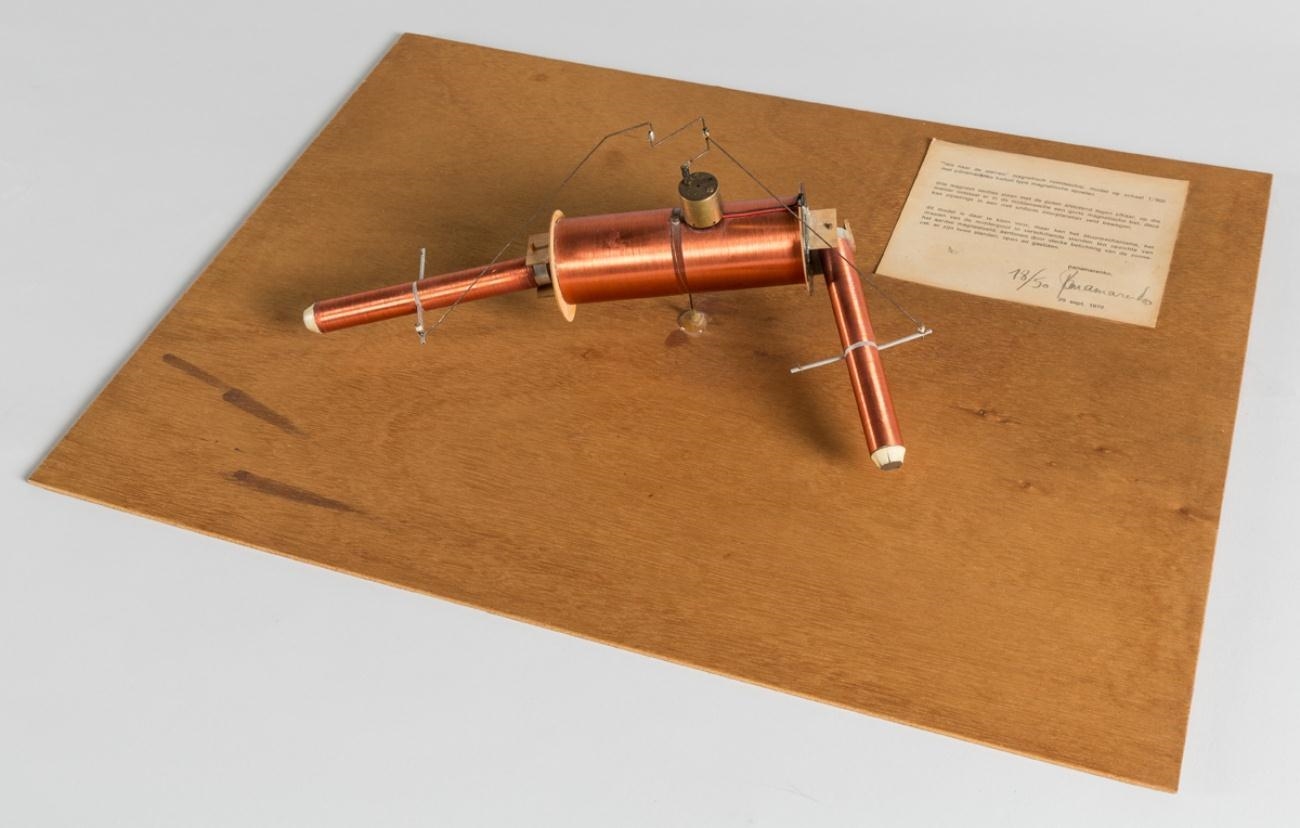
Whereas artists like Jean Tinguely have constructed
useless machines that comically mirror rationality, Panamarenko’s objects rarely
work (figure 3.11), provoking the viewer to think about the nature of invention
and the desires that motivate it. ...His scientific theories on flight
also highlight the fictional nature of scientific knowledge and blur the boundaries
between words and things.
Panamarenko's Voyage to the Star (1979)

The inventor-artist Steven Pippin meditates on photography. He coats with
photographic chemicals the interior surfaces of everyday objects like washing
machines, toilets, and bath tubs, turning them into cameras. His ingenious experiments
interweave the host object’s original functionality with that of a camera,
resulting in objects that occupy a difficult conceptual space outside the usual
polarization of functionalism and surrealism. They do produce sense, and we
understand them, but it is hard to say what exactly we understand about them.

In a world of artificial objects shaped almost entirely by functionalism, devices
like an Object with Which to See the World in Detail do not attempt to escape the
dictates (支配) of functionalism but instead work from within, extending it to include
the poetic and playfully subversive (figure 3.12).

Although often threatening, Ramette’s objects do not shock. Their critical content
is hidden beneath the poetry of construction and the humorous appreciation
of their function.

Wodiczko’s designs show how simple electronic technologies can challenge
preconceptions, but are at the margins of design. Although I see them as design
proposals not artworks it seems that, to hold a design view where electronic objects
function as criticism, one must move closer to the world of fine art because
the design profession finds it difficult to accommodate such research.


Hertzian Pathologies: Para-functionality and Electronic Objects
赫茲病理學


Between Rationality and Reality
The most effective examples in this chapter function as test pieces that, through
their marginalization, make visible the barriers limiting poetic experience in
everyday life.
透過邊緣化,將"限制詩意經驗" 的障礙,凸顯出來

Driven by poetry, imagination,
and intuition rather than reason and logic, they have their own rationality,
an alternative to our everyday scientific-industrial rationality.
...This is the role of
the para-functional as criticism.

Within this space lies the bizarre world of the “infra-ordinary,”
the subject of the next chapter

Homework 3:
Designing Para-functional Objects: (可用 AI 生圖)
誤用,錯用,邊緣化,已有之技術或設計,展現新奇,古怪,詩意之暢想。
(photos of mark-ups)
2023/10/23